Hiking in the Dolomites comes down to a choice between two styles: day hikes from a fixed base, back in a hotel every evening, or hut-to-hut treks over several days, such as the Alta Via routes. Which one suits you depends on your experience, the days you have and the difficulty of the trails, which in Italy are graded on the CAI scale. The season runs from mid-June to mid-September, while the mountain huts are open.
How trail difficulty is graded in the Dolomites
Italian trails are graded by the Club Alpino Italiano (CAI). The grades appear on maps, route descriptions and often on the signposts at the trailhead. They are worth learning before you plan anything, because in the Dolomites the same hut can be reached by an easy path or by an exposed section with fixed cables.
| Grade | What it means | Who it suits |
|---|
| T (tourist) | Forest roads and mule tracks, usually below 2,000 m, leading to pastures and huts | Everyone, families included |
| E (hiking) | Trails on mixed terrain, with short steep or exposed sections protected by cables | Regular walkers with hiking boots |
| EE (expert hikers) | Steep, slippery slopes, scree and short sections with cables or ladders | Fit hikers with a steady step and no fear of heights |
| EEA (equipped) | Via ferrata routes and equipped trails on rock | Hikers with helmet, harness, a certified via ferrata set and experience, or a mountain guide |
Elevation gain matters more than distance: a 15 km route with 1,000 m of ascent takes a full day. Official route times leave out breaks, so add at least an hour for stops and lunch at a hut.
Day hikes or hut-to-hut trekking?
Day hikes start from a village or from the top station of a lift and finish back in the valley. You walk with a light pack, you can change plans around the weather each morning, and you have a room, a shower and dinner every night without booking huts months ahead. This is the better option if you have a week, travel as a couple or with family, or want to mix hiking with other things.
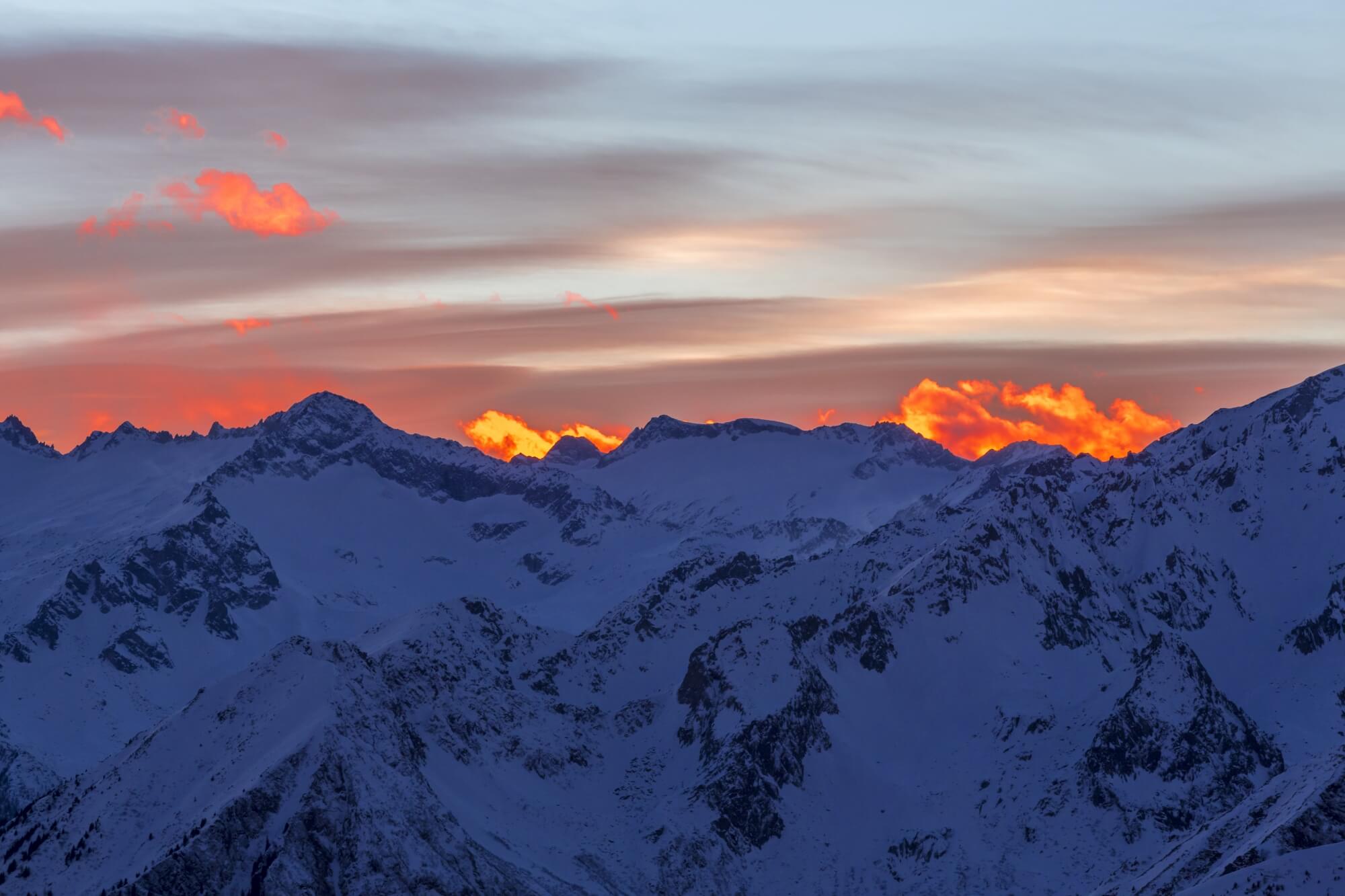
Hut-to-hut trekking follows a point-to-point or circular route with a night at altitude after each stage. It takes more planning. Beds in the busiest huts sell out early in July and August, your pack has to carry everything for several days, and bad weather leaves less room to adjust. What you get in return is sunrise and sunset in the high mountains, which day hikers never see.
Many hikers do both: a few days of day hikes to get used to the altitude and terrain, then one or two nights in a hut.
The Alta Via routes and the big Dolomites treks
The best-known multi-day routes are the numbered Alta Via trails, which cross the Dolomites from north to south, and the Dolomiti di Brenta Trek, a loop around the Brenta group in western Trentino.
| Route | Start and finish | Length | Stages | Difficulty |
|---|
| Alta Via 1 | Lago di Braies to Belluno | about 125 km | 12 stages | T to EEA, hardest sections equipped |
| Alta Via 2 | Bressanone to Feltre | about 180 km | 13 stages | EE |
| Dolomiti di Brenta Trek | loop with several access points | about 96 km | 11 stages, at least 6 days | moderate and difficult stages, with variants |
Both Alta Via routes are walked from June to September, while the huts are open, and Alta Via 2 is the longer of the two. The Dolomiti di Brenta Trek runs at an average altitude of about 2,000 m and has seven variants to match different levels. Four of its eleven stages are graded difficult, including Rifugio Ai Brentei to Rifugio XII Apostoli and Rifugio Tosa Pedrotti to Malga Spora.
You don't need to walk a whole trek. Many hikers pick two or three consecutive stages, such as the central section of the Brenta between Rifugio Graffer, Rifugio Tuckett and Rifugio Brentei, and come back down the same way.
Hiking in the Brenta Dolomites: where to start
The Brenta is a compact group of peaks, entirely within the Adamello Brenta Natural Park and part of the Dolomites UNESCO World Heritage Site. From the Madonna di Campiglio side you can walk up to the best-known huts in the group, and three summer lifts already take you above 2,000 m: the Spinale cable car, the Pradalago gondola and the Grostè gondola up to Rifugio Stoppani at about 2,500 m.
A classic moderate day is the loop from Rifugio Vallesinella to Rifugio Brentei: 15.5 km, about 1,085 m of ascent and six hours of walking without breaks. You climb to Rifugio Casinei, continue on trail 391 to the Brentei hut at 2,182 m, and return on trail 318, which has a few protected sections, down to the Vallesinella waterfalls. In summer the park's Vallesinella Express shuttle runs to the trailhead.
If you prefer less climbing, use the lifts and walk at altitude: the route from Monte Spinale to Passo del Grostè and the Five Lakes loop are described in our guide to the Dolomites in summer. For experienced climbers, the Via delle Bocchette runs above 2,400 m and is one of the best-known via ferrata routes in the Dolomites. It requires full equipment or a mountain guide.
How mountain huts work
Dolomites huts, known as rifugi, serve lunch to anyone passing by, and many offer beds in dormitories or shared rooms, usually with half board. In the Brenta the hut season starts around 20 June and ends in September. In 2026, Rifugio Tosa Pedrotti, at 2,491 m, was due to reopen on 20 June after a year of renovation.
A few rules apply almost everywhere:
- book overnight stays in advance, especially from mid-July to late August;
- a sleeping bag liner is mandatory, and several huts sell them on site;
- facilities are basic, because water and power are limited at altitude.
Check opening dates and availability with each hut before you go, since work or early-season snow can move them.
When to go hiking in the Dolomites
The season runs from mid or late June to mid-September, when huts and summer lifts are open. In June, snowfields can linger on the highest trails and need care or a detour. July and August bring the longest days, the busiest huts and frequent afternoon thunderstorms. September is quieter, with shorter days. Our guide on when to visit Madonna di Campiglio covers the weather month by month.
Safety and gear
Mountain thunderstorms usually build in the afternoon, so start early and plan a route that lets you reach shelter quickly. For Trentino forecasts, Meteotrentino is the reference, and the written forecasts describe uncertainty better than the icons. The emergency number in Italy is 112.
The minimum kit for a day hike:
- hiking boots with a grippy sole;
- layers, a waterproof and windproof jacket, a hat and gloves even in summer;
- water, food, sunscreen and sunglasses;
- a first aid kit, a power bank and a map of the route, paper or digital;
- trekking poles, especially useful on the way down.
Equipped sections need a helmet, harness and certified via ferrata set. If you can, don't hike alone, and tell someone your route and when you expect to be back.
A base in Madonna di Campiglio for hiking the Brenta
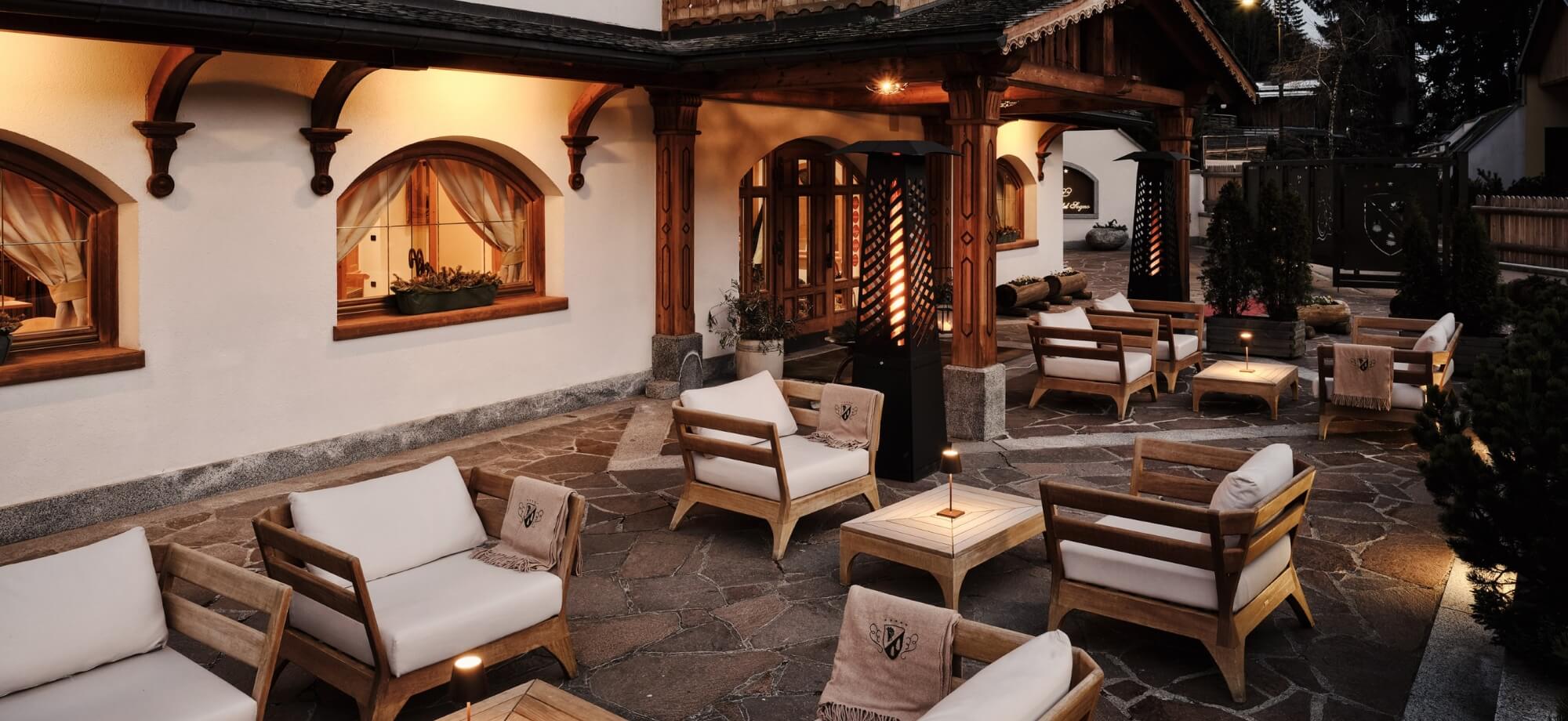
Day hikers need a base close to the trails and lifts. Chalet del Sogno in Madonna di Campiglio sits right next to the Spinale cable car, so in summer you can ride up to altitude straight from the hotel, and some hikes start on foot from the door. The hotel is open from mid-June to late September, in step with the hut season.
The owners are keen mountain people, and together with the staff and local mountain guides they share route advice and arrange guided outings. Summer offers include the DoloMeet Guest Card, which covers the park shuttles, or the Dolomeet PASSion, which adds the Madonna di Campiglio and Pinzolo lifts. After a day on the trails there is the Oasi del Sogno spa. More walking ideas for the area are on our page about hiking and excursions in the Brenta Dolomites.